Living in Cape Coral, many homeowners depend on their garage doors for daily convenience and security. But when problems show up, like a garage door stuck open in Cape Coral or a door that refuses to close, it can be frustrating—and even unsafe. The good news is that many of these issues can be safely diagnosed and sometimes fixed at home with the right approach. In this guide, I’ll share expert advice and practical DIY repair tips Cape Coral residents can use to troubleshoot common garage door problems while keeping safety as a top priority. Whether you’re dealing with uneven movement, noisy operation, or unresponsive controls, this article will help you understand what’s happening and what you can do about it.
Understanding How Your Garage Door System Works
Before jumping into repairs, it’s helpful to understand the main parts of your garage door system. Most garage doors in Cape Coral use a sectional design with a chain, belt, or screw-drive opener. Key components include:
| Component | Function |
|---|---|
| Garage Door Opener | Motor-operated device that controls opening and closing via remote or wall switch |
| Tracks | Metal rails that guide the movement of the door |
| Springs | Extension or torsion springs that counterbalance the door’s weight |
| Rollers | Small wheels that run along the track |
| Sensors | Located near the floor on both sides; they reverse the door if something blocks its path |
Understanding how these elements work together makes it easier to spot what might be wrong when something fails.
Common Garage Door Problems and Safe DIY Fixes
If your garage door won’t close, stops halfway, or opens again on its own, it may not mean a major breakdown. Many problems have simple explanations that you can safely check yourself—or fix with basic tools.
1. Garage Door Doesn’t Close All the Way
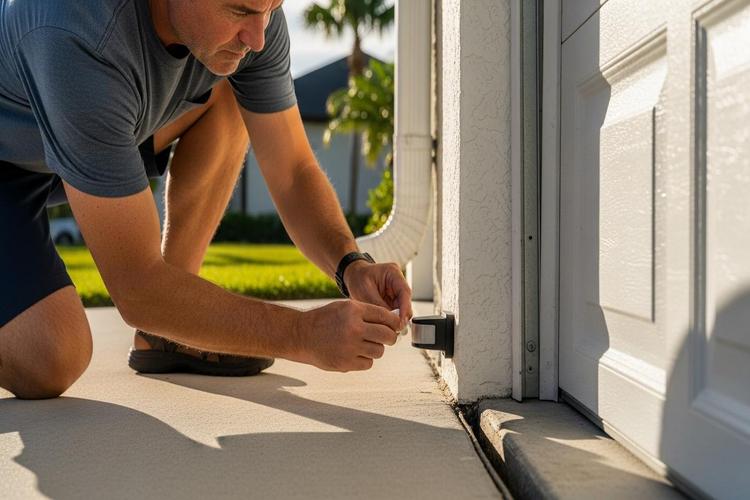
This often points to a problem with the safety sensors. These sensors prevent the door from closing if there’s an obstruction—or if they’ve become misaligned or dirty. For a quick sensor problem fix, do the following:
- Check if the LED lights on both sensors are lit. If one is blinking or off, it may be misaligned.
- Wipe lenses with a clean, dry cloth to remove dirt or spider webs.
- Adjust sensors so they face each other directly—usually, a click or alignment light helps confirm it.
2. Garage Door Stuck Open Cape Coral
If the garage door is stuck at the top, don’t try to force it closed. This can be a sign of a broken spring, cable issue, or a limit setting problem on the opener. While broken torsion springs should only be handled by professionals, you can check the opener settings:
- Use your opener manual to locate the “down limit” dial or screw.
- Turn it slightly clockwise to allow the door to move farther down before stopping.
- Test after each adjustment, and never over-tighten.
Also, check your remote batteries and wall switch connections. Power outages or tripped GFCI outlets can also leave garage doors unresponsive.
3. Loud Noises When Operating
Grinding, screeching, or rattling might indicate worn rollers or poorly lubricated metal parts. Apply garage door lubricant (not WD-40) to these areas carefully:
- Hinges and rollers: Apply where the pin meets the wheel.
- Springs: Lightly spray entire length to reduce friction.
- Chains: Light coating if your opener uses a chain drive.
4. Remote or Wall Switch Not Working
Check if the opener’s antenna is hanging down freely and not bent. Replace batteries in remotes and inspect wall-mounted controls for loose wires. If none of this helps, unplug the opener for 30 seconds, then plug it back in to reset the unit.
Safety First: Know Your Limits
While some repairs are safe for homeowners, others are best left to licensed professionals. According to the International Door Association (IDA), over 20,000 garage door-related injuries occur annually in the U.S., often due to improper attempts at spring or cable repairs. The U.S. Consumer Product Safety Commission (CPSC) also recommends annual inspections by trained techs to avoid serious hazards.
“Most residential garage door injuries happen during do-it-yourself repairs that involve high-tension components like springs or cables,” warns the Door & Access Systems Manufacturers Association (DASMA). “For your safety and the performance of your system, know when to call a trained technician.”
Here in Cape Coral, extreme heat, humidity, and hurricane season can add stress to garage door parts. If a garage door won’t close after several troubleshooting attempts, or if you hear loud popping when trying to operate it, the issue may be too dangerous to fix yourself.
Hire a professional immediately if you notice:
- A broken spring or frayed lifting cable
- Uneven lifting or sagging panels
- Smoke, burning smells, or electric arching from the opener unit
Prevent Issues with Regular Maintenance
Prevention is always better than repair. Performing annual or semi-annual tune-ups can save you money and boost the lifespan of your garage door system. Here’s a simple scheduled plan that works well in our Florida climate:
- Quarterly: Spray lubricant on moving metal parts. Check and tighten loose bolts or brackets.
- Semi-annually: Clean your photo eyes and inspect tracks for rust or debris. Test the auto-reverse safety feature using a 2×4 under the door.
- Annually: Inspect weather seals, balance the door manually (with opener disconnected), and schedule a professional safety inspection.
For homes near the coast in Cape Coral, pay extra attention to corrosion on springs and track hardware. Salt air can quickly accelerate rust, especially in homes less than a mile from the water.
Final Thoughts
Garage doors are one of the most used, yet easily overlooked, parts of your home. If your garage door stuck open Cape Coral or you notice odd movement, don’t ignore it. Many issues can be tackled safely with a little knowledge, a few tools, and the right approach from this guide. But always remember: when in doubt, it’s safer to call in a professional, especially for high-tension or electrical concerns. For homeowners in our community, these DIY repair tips Cape Coral can help you keep your garage door reliable, quiet, and safe—season after season.